The “Check Engine” Light of Air Compressors
Compressor Now2026-07-01T11:01:19-07:005 signs your unit is about to fail before it actually stops.
In a busy shop, your air compressor is the heartbeat of production. When it’s running smoothly, you don’t even think about it. But when it fails unexpectedly? Everything grinds to a screeching, expensive halt.
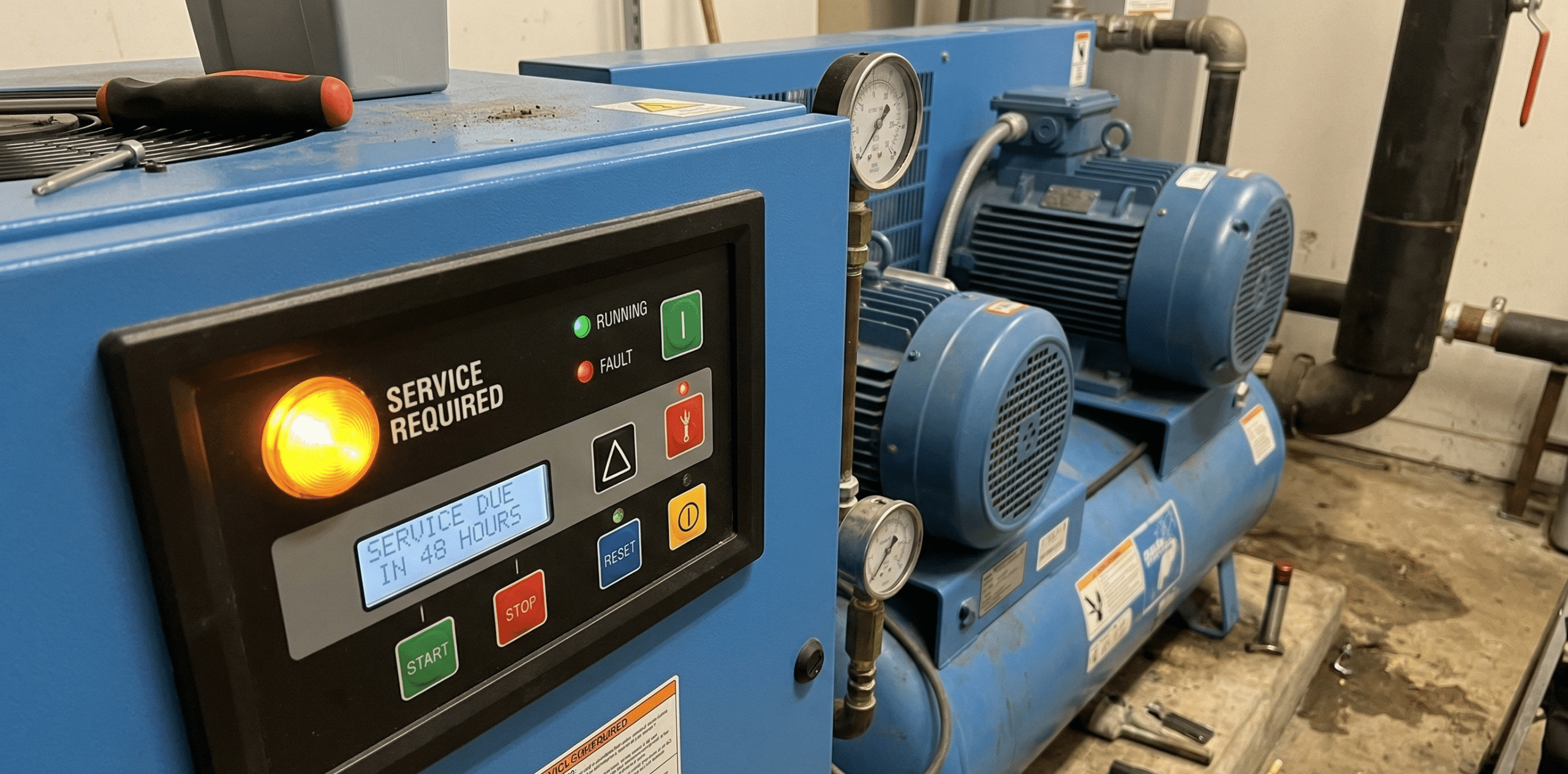
Think of your compressor like your car. Before a total breakdown, it usually tries to tell you something is wrong. We call these the “Check Engine” lights of the compressed air world. At Compressor Now, we want to help you catch these warnings before they turn into a 2:00 AM emergency repair bill.
Here are the 5 major signs that your unit is on its last legs.
The Symphony of Destruction (Strange Noises)
Air compressors aren’t exactly quiet, but you know the “normal” hum of your machine. If that hum turns into a rattle, a clank, or a high-pitched squeal, pay attention.
- Rattling/Banging: Often indicates loose parts or a failing connecting rod.
- Squealing: Usually a sign that a belt is slipping or a bearing is beginning to seize.
- Grinding: This is the sound of metal-on-metal—likely a catastrophic pump or motor failure in the making.
Excessive Heat
While compressing air naturally generates heat, your unit is designed to dissipate it. If the air coming out of the discharge line is significantly hotter than usual, or if the unit is tripping its thermal overload switch, the system is struggling. Overheating is often caused by clogged coolers, low oil levels, or internal friction.
Oil Where It Shouldn’t Be
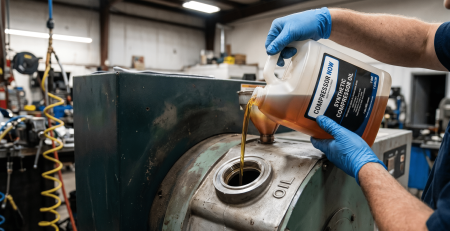
If you start noticing oil downstream in your air lines or pooling around the base of the unit, you have a problem. “Oil carryover” suggests that your separator is failing or, more seriously, that your piston rings or seals are worn out. Not only does this signal a compressor failure, but it can also ruin your pneumatic tools and contaminate your final product.
Frequent “Short Cycling”
Does your compressor turn on and off more frequently than it used to? This is called short cycling. It often happens when the pressure switch is malfunctioning or the internal valves are leaking. This constant “start-stop” puts immense strain on the motor and will lead to a burnout much faster than continuous operation.
Reduced Air Pressure and Flow
If your tools seem “sluggish” or the compressor is running longer just to reach the same PSI, the unit is losing efficiency. This is often the result of:
- Worn-out pump internal components.
- Leaky intake valves.
- Significant internal air leaks.
Pro Tip: If your compressor is running 100% of the time just to keep up with a load it used to handle easily, it’s working itself to death.
Don’t Wait for the “Bang”
Ignoring these signs is a gamble where the stakes are your facility’s uptime. If your unit is showing any of these symptoms, it’s time for a professional diagnostic check. A simple valve replacement or belt tightening today is significantly cheaper than a total system replacement next week.