
Summer Proofing Your System
CompressorNow2026-06-08T13:33:44-07:00How to prevent overheating when the warehouse temperature spikes.
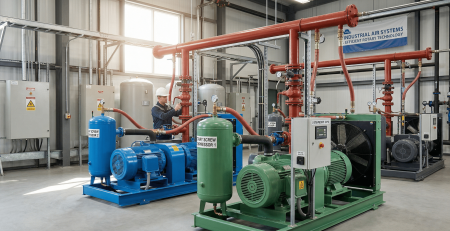
When the warehouse floor starts feeling like a sauna, your air compressor is usually the first to feel the heat. Air compressors generate a massive amount of internal thermal energy, and when the ambient temperature spikes, that heat has nowhere to go.
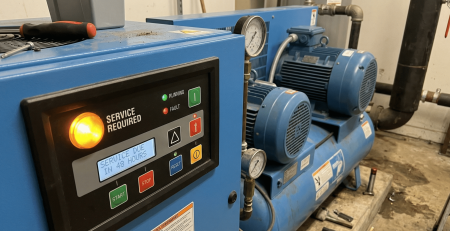
Overheating isn’t just a nuisance; it leads to emergency shutdowns, oil degradation, and expensive internal damage. At Compressor Now, we’ve seen how one heatwave can sideline an entire production line.
Here is how you can summer-proof your compressed air system before the mercury hits the red zone.
Master the Airflow
Your compressor needs to “breathe” to stay cool. If it’s tucked in a tight corner or surrounded by pallets, it’s inhaling its own hot exhaust.
- Clear the Perimeter: Ensure there is at least a 3-foot clearance around the unit.
- Check Ventilation: Are your intake louvers open? Is the exhaust fan actually pushing air out of the building?
- Ducting Check: If your system uses ducting to vent heat, ensure there are no leaks or obstructions.
Deep Clean the Coolers
Think of your compressor’s oil cooler and aftercooler like a car’s radiator. If they are coated in warehouse dust and grime, they can’t exchange heat efficiently.
- Blow It Out: Use low-pressure compressed air to blow dust out of the cooler fins.
- The “Light Test”: Shine a flashlight behind the cooler. If you can’t see light through the fins, air can’t get through either.
Oil Is Your Lifeblood
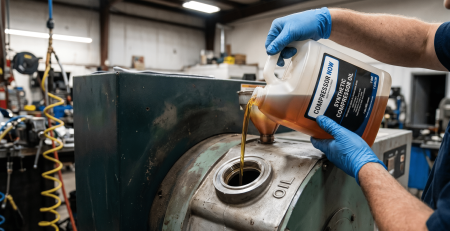
In a rotary screw compressor, oil isn’t just for lubrication—it’s the primary cooling medium. Heat breaks down oil chemistry, thinning it out and reducing its ability to absorb thermal energy.
| Indicator | Why It Matters in Summer |
|---|---|
| Oil Level | Low oil means the remaining fluid works twice as hard and gets twice as hot. |
| Oil Color | Dark, burnt-smelling oil has lost its varnish-inhibiting properties. |
| Filter Status | Clogged filters restrict flow, causing “hot spots” in the air end. |
Manage the Condensation
Hot air holds more moisture. As the humidity rises, your system will drop significantly more water into the lines.
- Service the Drains: Ensure your timed or zero-loss drains are firing correctly.
- Dryer Maintenance: Check the refrigerant level and condenser coils on your refrigerated dryer. If the dryer fails, your downstream tools will be “showering” instead of working.
Adjust the Set Points (Carefully)
If your compressor is running at 125 but your tools only need 90, you are generating unnecessary heat. Reducing your operating pressure—even by a few PSI—lowers the thermal load on the motor and the air end.