
Air Compressor Oil Guide: Types, Maintenance, and Oil Changes
Air Compressor Oil 101: Choosing the Right Oil and Maintaining Your Compressor
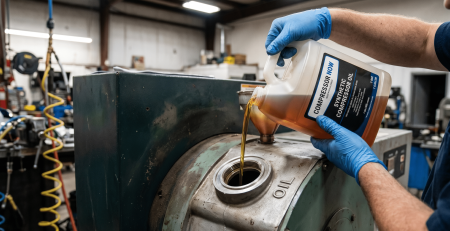
Air compressor oil plays a critical role in keeping your equipment operating reliably. Whether you use a piston compressor in a small workshop or a rotary screw compressor in an industrial facility, proper lubrication helps reduce wear, manage heat, and protect internal components.
Choosing the right oil and following the manufacturer’s maintenance recommendations can help extend equipment life, reduce unexpected downtime, and keep your compressed air system running efficiently. Here’s what you need to know about compressor oil, the differences between common oil types, and when to change it.
Why Does Your Air Compressor Need Special Oil?
Air compressors operate under demanding conditions, and the lubricant must be suitable for the compressor’s design, operating temperature, and workload. While automotive engine oil may seem like a convenient alternative, it is not automatically appropriate for compressor applications.
Compressor oil typically serves four important functions:
- Lubrication: Reduces friction and wear between moving components, helping protect the pump or air end.
- Cooling: Helps carry heat away from internal components during operation.
- Sealing: In certain compressor designs, oil helps create an effective seal between internal components.
- Protection: Helps limit corrosion and component wear when the correct lubricant is used and maintained properly.
Not every compressor uses oil in the same way. Oil-lubricated piston and rotary screw compressors have different lubrication requirements, while oil-free compressors use different designs to avoid introducing oil into the compression chamber. Always identify your compressor type before selecting a lubricant.

Mineral Oil vs. Synthetic Compressor Oil
One of the most common decisions when selecting compressor oil is whether to use a mineral-based lubricant or a synthetic formulation. The right choice depends on the compressor manufacturer’s specifications, operating conditions, and maintenance requirements.
| Feature | Mineral-Based Oil | Synthetic Oil |
|---|---|---|
| Initial cost | Generally lower | Generally higher |
| Temperature performance | Depends on the formulation and operating conditions | Many formulations offer improved thermal stability |
| Service life | Often requires more frequent changes | May allow longer service intervals when approved by the manufacturer |
| Typical applications | Suitable for many conventional compressor applications | Often used in demanding or continuous-duty applications |
Synthetic compressor oils can offer advantages in demanding environments, including improved oxidation resistance and longer oil life in suitable applications. However, not every synthetic lubricant is compatible with every compressor.
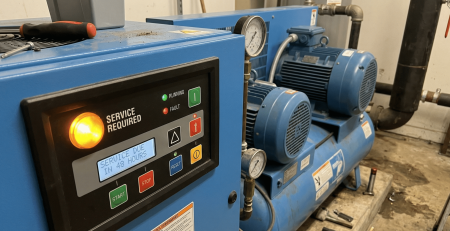
Oil-change intervals vary considerably by compressor model, oil formulation, operating temperature, and service conditions. Rather than relying on a single number of operating hours, consult the manufacturer’s maintenance schedule and the lubricant’s specifications.
Can You Use Automotive Motor Oil in an Air Compressor?
Using automotive motor oil in an air compressor without manufacturer approval is not recommended. Compressor lubricants are formulated for specific operating conditions, and an oil designed for an automotive engine may not provide the properties required by your compressor.
Detergents are not inherently harmful in every compressor application, but automotive oils may contain additive packages that are unsuitable for particular compressor designs. Other considerations include viscosity, oxidation resistance, foaming, moisture handling, and compatibility with seals and internal materials.
For many conventional oil-lubricated piston compressors, a suitable non-detergent compressor oil is specified. Rotary screw compressors often require a dedicated compressor lubricant, which may be mineral-based or synthetic.
The bottom line: Do not select oil based on viscosity alone or assume that every compressor requires non-detergent oil. Check the owner’s manual, manufacturer’s oil specifications, and any approved lubricant cross-reference before making a change.
When Should You Change Air Compressor Oil?
Oil-change intervals depend on the compressor model, lubricant, operating hours, and environmental conditions. The following are general maintenance considerations, not universal service intervals.
- Reciprocating (piston) compressors: Check the manufacturer’s recommended schedule, which may specify changes by operating hours or elapsed time.
- Rotary screw compressors: Follow the prescribed interval for the exact model and approved oil. Some lubricants support extended service intervals, but these should not be assumed without manufacturer approval.
- Heavy-duty or demanding environments: High temperatures, dust, moisture, and frequent operation can affect lubricant condition and may require additional inspections or maintenance.
Oil appearance can also provide useful warning signs. Milky or cloudy oil may indicate moisture contamination, while unusually dark oil or a burnt smell can indicate overheating, oxidation, or other problems. These signs warrant investigation rather than simply topping off the oil.
Follow the manufacturer’s procedure for checking oil condition and changing the lubricant. If contamination or overheating is suspected, determine the cause before returning the compressor to normal service.
Air Compressor Oil Maintenance Checklist
Routine checks can help identify lubrication problems before they lead to more serious equipment issues.
- Check the oil level: Inspect the sight glass, dipstick, or other level indicator according to the manufacturer’s instructions. Check the level under the specified operating conditions.
- Look for changes in oil condition: Watch for unusual discoloration, cloudiness, debris, or a burnt odor.
- Monitor operating temperature: Unusually high temperatures may indicate inadequate cooling, poor ventilation, incorrect lubrication, or another mechanical issue.
- Keep the fill area clean: Wipe the area around the oil fill opening before adding lubricant to prevent dirt and debris from entering the system.
- Record maintenance: Track operating hours, oil changes, filter replacements, and other scheduled service to help maintain a consistent maintenance history.
- Use the correct lubricant: Verify the required oil specification before topping off or replacing the existing oil. Do not mix lubricants unless the manufacturer confirms compatibility.
How to Choose the Right Air Compressor Oil
Before ordering compressor oil, gather a few key details about your equipment:
- Manufacturer and model: Identify the compressor and, when applicable, the specific air end or pump.
- Compressor type: Determine whether the equipment is a reciprocating piston compressor, rotary screw compressor, or another design.
- Required oil specification: Check the owner’s manual or manufacturer’s service documentation for the approved lubricant and viscosity.
- Operating conditions: Consider ambient temperature, duty cycle, operating temperature, and environmental conditions.
- Service requirements: Confirm the recommended oil-change interval and whether a particular lubricant is approved for extended service.
These details can help prevent ordering an incompatible lubricant or using an oil that does not meet the equipment’s requirements.
Summary: Protect Your Investment with Proper Compressor Lubrication
Air compressor oil does much more than lubricate moving parts. The correct lubricant helps manage heat, protect internal components, and support reliable operation over the life of the equipment. Choosing the wrong oil or overlooking scheduled maintenance can contribute to premature wear, overheating, and avoidable downtime.
To maintain your compressor, verify the manufacturer’s oil specifications, monitor the oil level and condition, and follow the recommended service schedule. Consider the compressor’s design and operating environment when comparing mineral-based and synthetic lubricants, and never assume that an oil suitable for one compressor will work in another.
Need help finding information for your compressor? The manufacturer, model number, and existing oil specification are useful starting points when identifying the correct lubricant for your equipment.
Contact CompressorNow for More Information
Have questions about your air compressor, replacement parts, or maintenance requirements? CompressorNow can help you locate product information and explore available equipment and parts for your application.
Visit CompressorNow.com to browse our selection of air compressors and related products, or contact our team for assistance with your inquiry. When reaching out about compressor oil or maintenance parts, include your equipment’s manufacturer, model number, and serial number when available.
We look forward to helping you find the information you need to keep your compressed air equipment operating reliably.