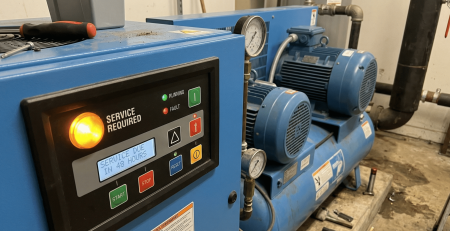

5 Essential Air Compressor Spare Parts Every Facility Needs
The Essential Spare Parts Kit: 5 Items Every Facility Manager Should Have on the Shelf to Avoid 2 A.M. Downtime
No facility manager wants to be standing on a dark, echoing plant floor at 2 a.m. while a “Low Pressure” alarm blares and production grinds to a halt. When a compressor goes down, it’s not just inconvenient—it’s immediate lost production, delayed orders, and real financial impact.
At Compressor Now, we’ve found that the majority of emergency service calls could have been resolved in minutes if the right spare parts were already on-site. The difference between a 15-minute fix and an 8-hour shutdown often comes down to preparation.
To protect your uptime and reduce emergency costs, here are the five essential spare parts every facility should keep in stock.
Why Spare Parts Matter in Compressed Air Systems
Air compressors are high-demand machines that operate under heat, pressure, vibration, and continuous cycling. Even well-maintained systems experience wear over time.
When a single component fails, the entire production system can come to a stop. Having critical spare parts on hand reduces downtime, eliminates rush shipping costs, and keeps your operation running smoothly.
Think of it as insurance for your air system—except it pays you back the moment something goes wrong.
1. Complete Filter Set (Air, Oil, and Panel Filters)
Contamination is one of the most common causes of compressor failure. Filters are the first line of defense, and when they become clogged, everything downstream suffers.
The 2 a.m. Scenario: A dusty environment overwhelms the intake system. The compressor overheats, trips a safety shutdown, and production stops instantly.
The Fix: Having replacement air, oil, and panel filters on hand allows for a fast swap. This restores airflow, protects internal components, and prevents expensive electrical damage from overheating.
Panel filters are especially important, as restricted cabinet airflow can lead to control board failures—one of the most expensive emergency repairs.
2. Air/Oil Separator Element
The air/oil separator is responsible for keeping oil inside the compressor while allowing clean air to exit the system. When it fails or becomes saturated, oil carryover becomes a serious issue.
The 2 a.m. Scenario: Oil starts appearing in pneumatic lines and CNC equipment, contaminating tools and risking product quality.
The Fix: Replacing the separator element immediately restores air quality and prevents downstream damage. This is one of the most critical consumables in any oil-injected system.

3. OEM Compressor Lubricant (Pre-Filled Supply)
Oil is not just a lubricant—it is also a cooling and sealing medium in many compressor systems. Running low can trigger shutdowns or cause accelerated wear.
The 2 a.m. Scenario: A small leak triggers a low-oil shutdown. The system cannot restart until the proper oil level is restored.
The Fix: Keeping OEM-approved lubricant on hand ensures you can quickly top off the system and restore operation. Using the correct oil type is essential—substitutes can lead to viscosity issues, overheating, or component damage.
4. Pressure Switch or Pressure Transducer
The pressure switch or transducer acts as the control brain of the compressor system. It determines when the machine starts, stops, loads, and unloads.
The 2 a.m. Scenario: The compressor refuses to start even though system pressure is low. The switch is misreading or has failed entirely.
The Fix: Replacing a pressure switch or transducer is typically a quick electrical repair that restores full system logic. Having a spare prevents unnecessary downtime while waiting for a replacement part.
5. Solenoid Valve or Rebuild Kit
Solenoid valves control airflow into and within the compressor system. They regulate load/unload cycles and ensure the system produces air only when needed.
The 2 a.m. Scenario: The compressor runs continuously but produces little to no usable air. The inlet valve is stuck or the solenoid coil has failed.
The Fix: Replacing the solenoid valve or rebuilding it with a kit restores proper airflow control and immediately returns the system to full capacity.

The Cost of Not Having Spare Parts
What often gets overlooked is the hidden cost of waiting for parts:
- Expedited freight charges for emergency shipping
- Lost production during downtime
- Expensive after-hours service calls
- Secondary damage caused by continued operation in a failed state
In many cases, a $100–$500 spare part prevents thousands of dollars in downtime and repair costs.
Building a Reliable Spare Parts Strategy
A good spare parts strategy is not about overstocking—it is about smart preparation.
Focus on consumables, high-failure components, and parts that directly impact system shutdown conditions. These are the items that determine whether your facility stays online or goes idle.
Review your compressor model, operating environment, and maintenance history to refine your spare inventory over time.
Summary
Compressed air systems are essential to modern manufacturing, but they are also vulnerable to predictable component failures. Having the right spare parts on hand can dramatically reduce downtime, prevent emergency service calls, and protect production schedules.
Filters, separators, lubricants, pressure controls, and solenoid components represent the most critical items every facility should keep in stock. Together, they form a simple but powerful defense against unexpected shutdowns.
Need Help Building Your Spare Parts Kit?
Compressor Now can help you identify the exact spare parts your system needs based on your compressor model and application.
Contact our sales team today to build a customized spare parts strategy and keep your operation running without interruption.